So firstly, why do you need to plan an integrated letterbox marketing and digital media campaign?
It’s really important to have your eye on the future when you’re developing your campaign. It’s not just about planning for the results you want to get now – it’s also about where this campaign will take you. By setting these long-term goals, you can continually boost and invigorate your campaign performance.
This isn’t a case of smashing your media channels together and hoping for the best. Just like building blocks, you need to consider how each channel works with and enhances the others. If you’re looking to create a seamless campaign, then you need to think hard about what role you want printed communications to play in this mix.
What are the three biggest things you should consider when developing your strategy?
I would always suggest asking these three questions at strategy stage:
-
What does success look to this campaign? What are your success criteria – higher response rates, increased ROI, better engagement? Choose your objective and set measurable goals.
-
How can you maximise the responsiveness of this campaign? Consider how you’re going to make it as easy as possible for the customer to reach that final call to action.
-
How can you create engagement and response? Print can be an expensive initial outlay, so it’s crucial to plan how you’ll get your ROI to work positively. Think about what you can do to create print that creates engagement and response – that’s your formats, your messaging and your design.
So you have your strategy, how do you then decide which letterbox channel is right for your campaign?
The innovative way to approach the three channels is to look at your options, work out which will deliver best results (maybe it’s a carefully curated combination of the three!) and test your hypothesis.
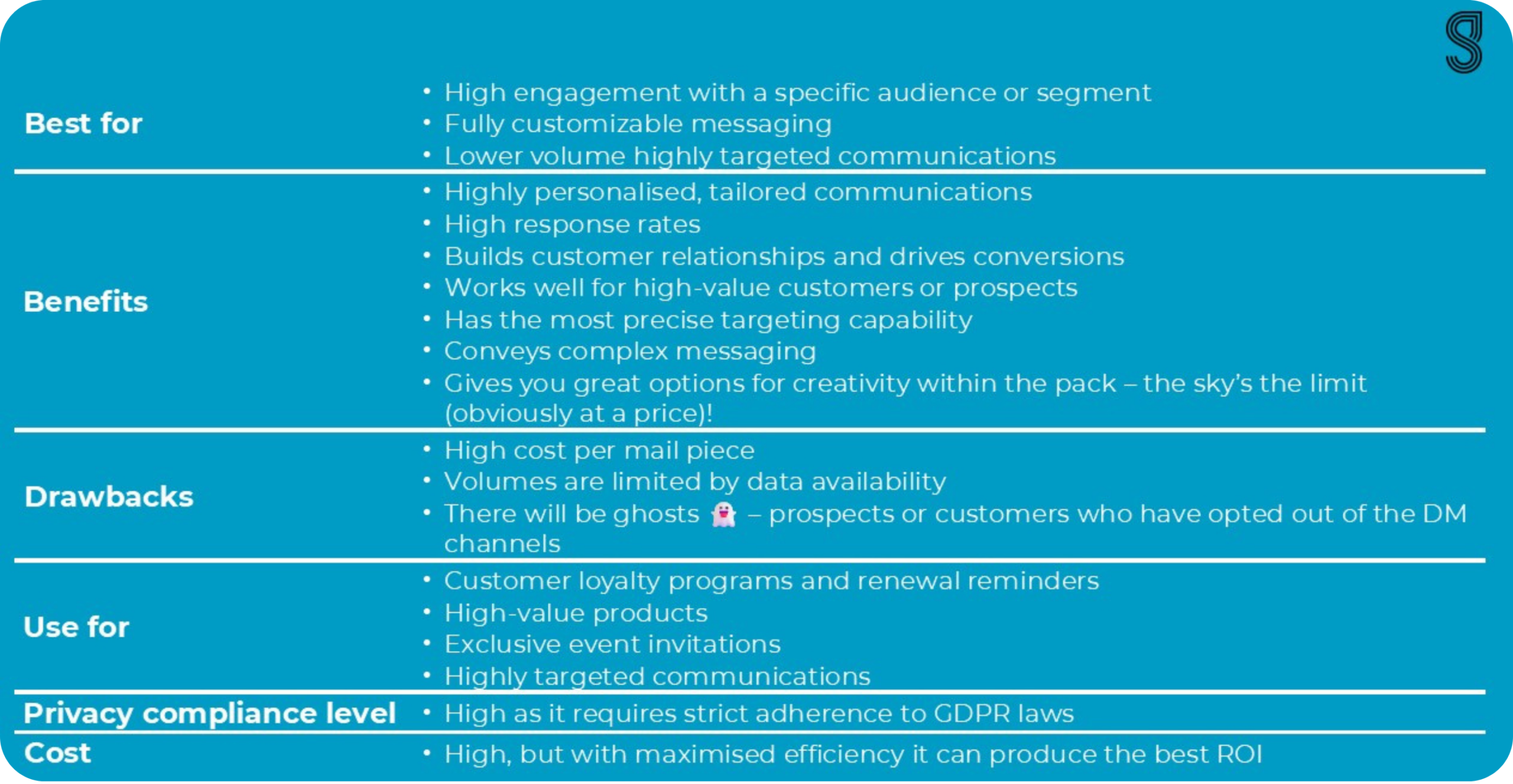
Option 1 – Direct Mail
Direct Mail is the specialist of the set. It’s super personal, because it’s sent to a specific individual or business. As a result, it grabs attention and builds trust with your customers.
Option 2 – Partially Addressed Mail
Prefer the best of both worlds? Try Partially Address Mail (PAM) to lend a personal touch, without using specific names. Mail is targeted to households based on demographic or geographic profiling – helping you to expand your reach and grow your market.
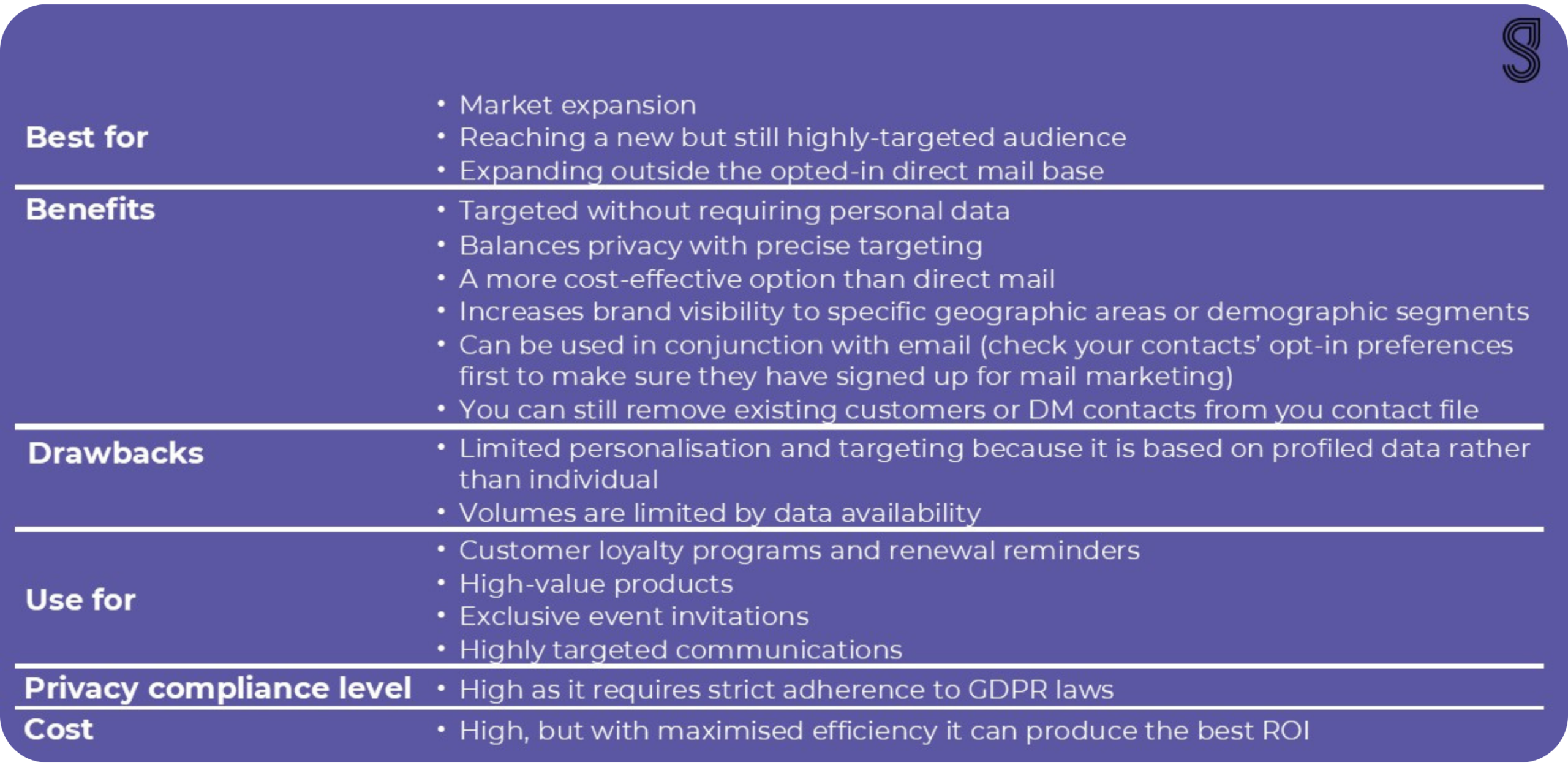
Option 3 – Door Drop
Achieve your growth goals while being budget-friendly. Unaddressed mail like leaflets, flyers and brochures can be delivered to every household within a designated area.
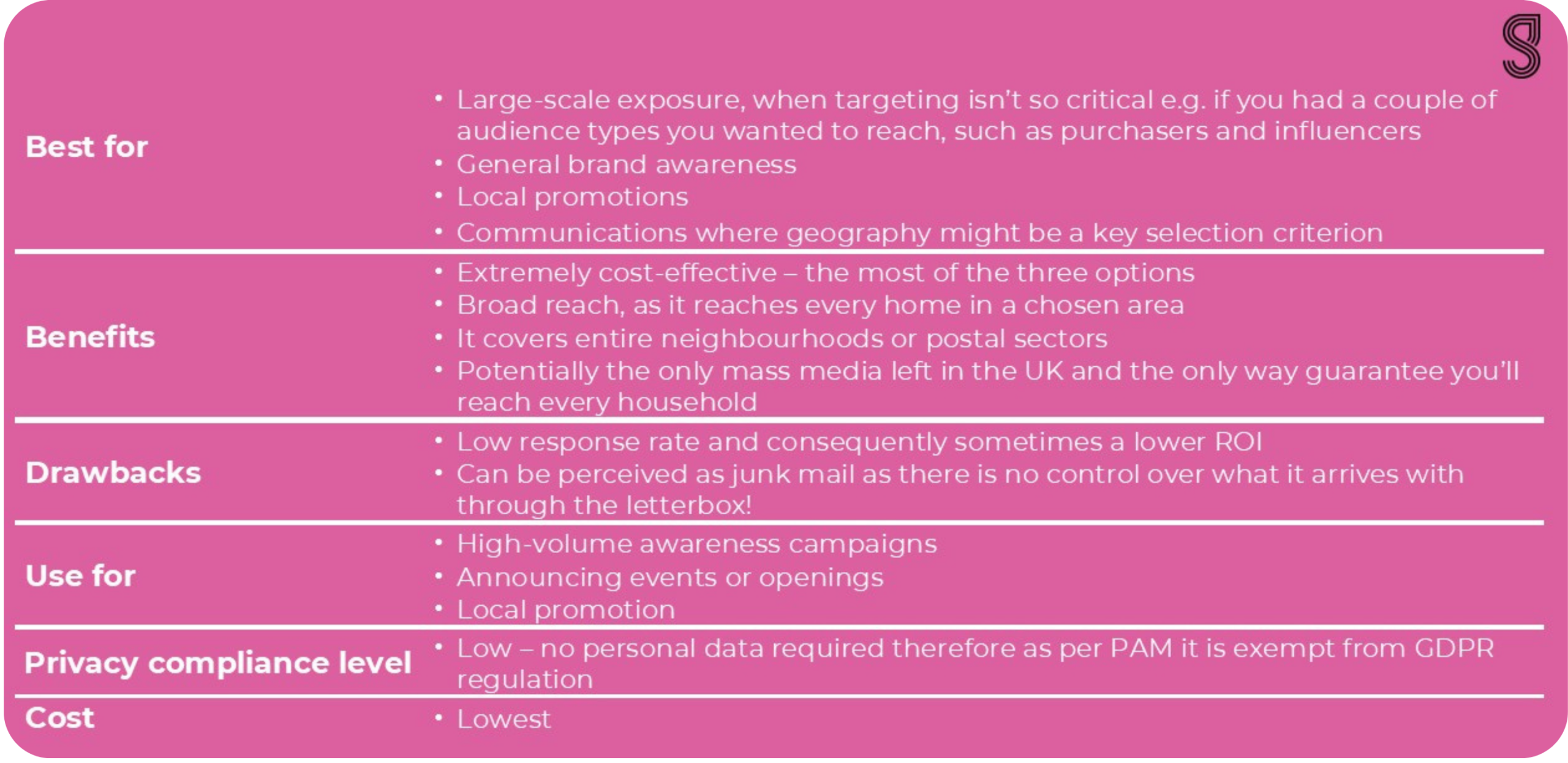
That’s Part I signed off, stay tuned for Part II, where we explore the need to test your strategy is working as hard for you as it possibly can!
See how we did it for SGS
Who knew printed communications could have such a dramatic impact on response rates, plus lead to a 5:1 ROI? We did. See how we created a highly-targeted DM pack for SGS – one that that partnered up with digital to work as part of their broader marketing strategy and build up their customer base.
In an arena where experience is light and skills have been lost, it’s the little fixes that give your printed communications the extra edge, and get you the responses you need.
Golley Slater are one-to-one specialists that create and invigorate door drop, PAM and direct mail campaigns, creating a seamless blend between print and digital.
From targeting and strategy to buying print and maximising your creative options, we make your Letterbox marketing more effective and more efficient. Our eye is always on the bottom right-hand corner of the spreadsheet and everything we do is designed to deliver measurable business benefit.