This website will offer limited functionality in this browser. We only support the recent versions of major browsers like Chrome, Firefox, Safari, and Edge.

Hero Image

February 24th, 2026

What the new LHF regulations really mean for food & drink brands

Hero Image

For those working within the FMCG sector, the regulatory drumbeat has been getting louder for some time. While HFSS has shaped how less healthy foods (LHF) are placed and promoted for several years, the introduction of it marks the latest evolution of those rules and regulations, extending HFSS principles directly into advertising and brand communications.

As of 5 January 2026, new government regulations under the Health and Care Act 2022,  place restrictions on advertising for identifiable less healthy food and drink (LHF) products. These rules build on the existing HFSS framework, but crucially go further, reshaping how brands can use TV and paid online media to drive awareness.

In practice, this means that identifiable LHF products are now restricted on TV before 9pm and across paid online media at any time. The shift from HFSS placement and promotion controls to LHF advertising restrictions represents a significant change: brands must now ensure that LHF products simply don’t appear in these channels at all.

A closer look at the restrictions

‘Identifiable’ less healthy food and drink products are prohibited from appearing:

  • On television between 5:30am and 9:00pm

  • On on-demand programme services between 5:30am and 9:00pm

  • In paid online media at any time

How this translates in-store

HFSS has been reshaping in-store environments for several years, so for many retailers these changes won’t feel new. The original restrictions focused on where HFSS products could be placed, with more recent updates completing the picture by tightening how they can be promoted.

The result is a continued shift in visibility and value strategies, rather than a sudden reset.

Key in-store restrictions include:

  • Placement restrictions (new): HFSS products cannot be placed in high-visibility locations in medium and large retailers (250+ employees). This includes checkouts, end-of-aisles, store entrances and online homepages, all designed to reduce impulse purchasing.

  • Promotion restrictions (newer as of 5 January): Volume-based price promotions such as BOGOF, 3-for-2 or meal deal add-ons are now prohibited for HFSS products. However, simple price reductions remain allowed.

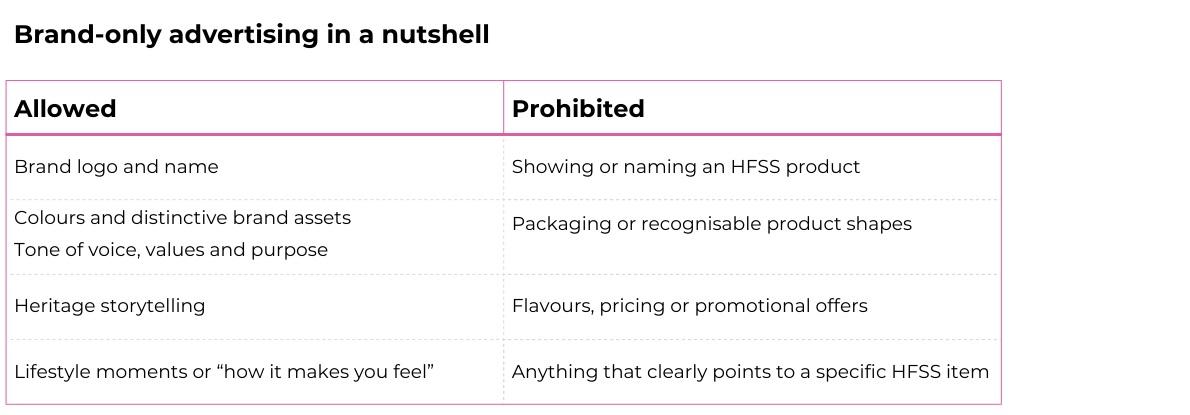
While the new LHF rules may feel restrictive at first glance, they’re less about closing doors and more about fundamentally changing how brands show up. The shift away from product-led advertising towards brand-led, product-agnostic storytelling is forcing a rethink of long-held marketing playbooks.

Without the crutch of the pack shot or the consumer’s immediate craving for LHF, brands are being pushed to think more brand centric and creatively about advertising, pivoting to invest in long-term equity, emotional connection and distinctive brand worlds that can stand on their own.

In many ways this sparks opportunity. It encourages brand marketers to explore new branded territories, find fresher ways to build fame, and communicate value without relying on overt product cues. For healthier brands, this moment is equally pivotal. With fewer LHF messages dominating the paid media landscape, now’s the time to lean into innovation, and confidently step into the ‘treat’ space.

In our next HFSS piece, we’ll take a look at the brands already pivoting their marketing strategy with impactful campaigns that sit within the new regulations.

7 minute read

TRANSPORT FOR WALES LAUNCHES NEW BRAND PLATFORM ‘WOVEN THROUGH WALES’

Read More