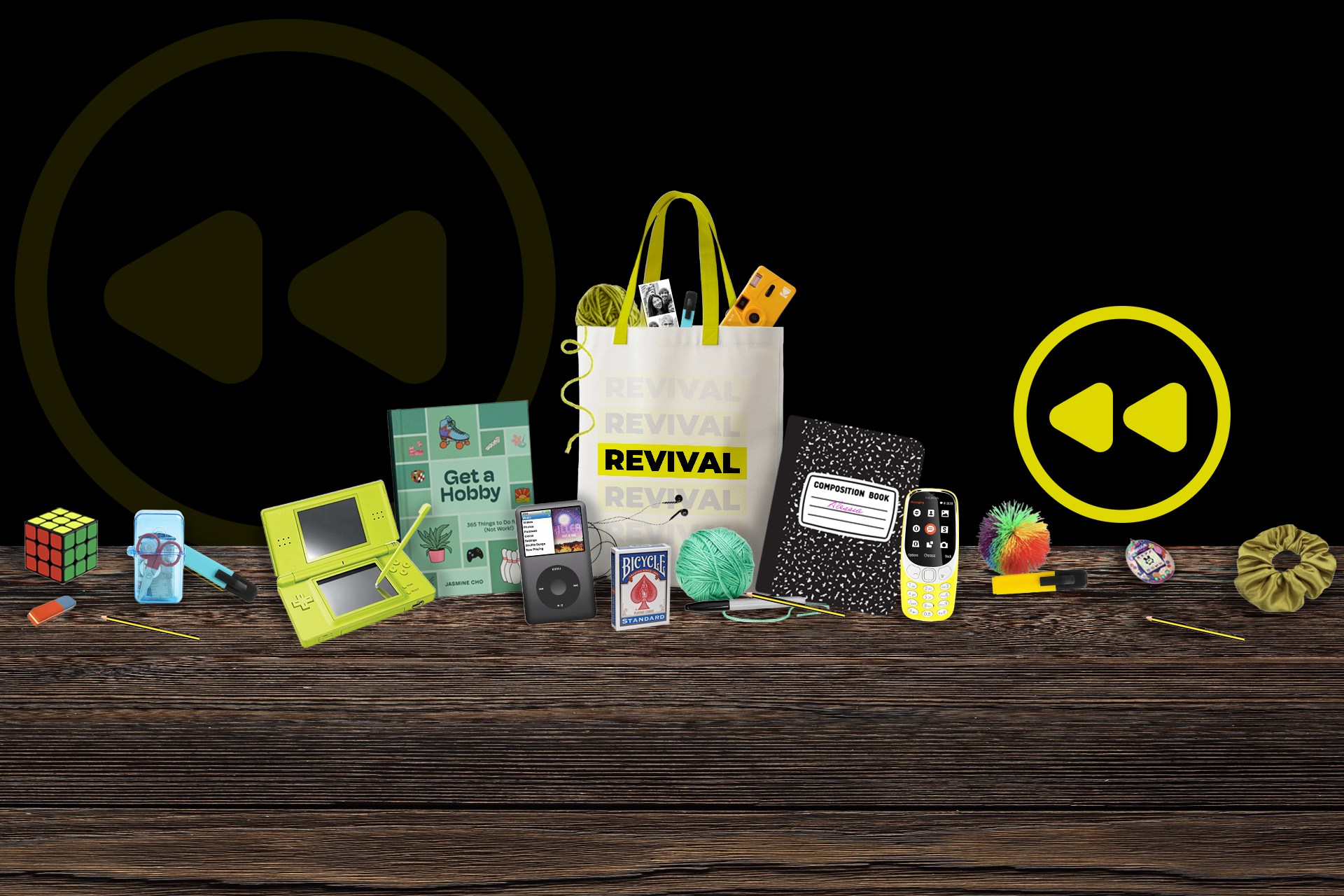
In thirty years of watching shoppers, I’ve noticed the most significant trend shifts rarely announce themselves loudly. They show up quietly, in aisles, baskets, social following. This time, it is showing up in a tote bag. Instead of just a laptop and a phone, it’s filled with other things. Things like a paperback book, maybe some knitting needles, a sketchbook, colourful gel pens.
This is the concept of the analogue tote bag, and it’s become a symbol for a much bigger shift we’re seeing, especially with Gen Z.
A content creator in California, Sierra Campbell, posted her analogue bag on TikTok and received over 200,000 views in only a few days, with a comments section full of Gen Z’s recognising themselves.
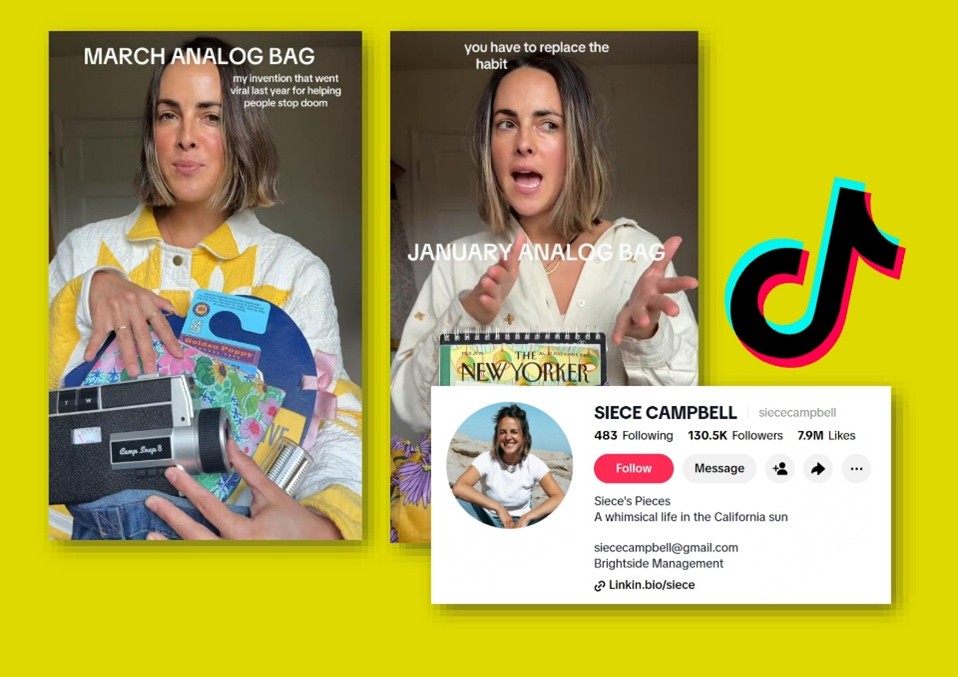
The Guardian called the analogue tote trend “a fashionable answer to doom scrolling”. I’d call it something worth watching. We are talking about the generation every marketer has spent a decade trying to decode. Gen Z, the most digitally native cohort in history and they are now actively and purposefully putting away their phones and reaching for a crochet hook.
The data on searches also point to something real. Michaels’ 2026 Creativity Trend Report shows needlepoint searches up 251% in 2025 vs PY and sewing patterns up 152%. The UK art and craft materials market is projected to reach £2.06 billion by end of 2026. Demand for 35mm film doubled between 2021 and 2026. Vinyl continues to outsell CDs. This looks like a trend with actual purchase behaviour behind it.
But here’s where it gets interesting. This movement is being documented and shared on TikTok, the very platform some assume Gen Z is said to be rejecting. Hashtag #analogue_photography has over 333 million views, Pinterest reports pen pal searches up 90%, sales of ‘dumb’ phones are up 148% since 2021 among 18–25-year-olds.
This paradox is worth sitting with.
What’s happening might be less about retreat and more about renegotiation? The data suggests a more complex picture. 94% of Gen Z still use at least one social platform daily. Yet according to Deloitte’s 2025 Digital Consumer Trends survey, 29% deleted a social media app in the past 12 months. They’re not logging off, they’re just constructing new boundaries.
But the psychology of this trend runs a little deeper than digital fatigue. This is a generation that’s grown-up questioning what they see. According to research from Bulbshare, 84% of Gen Z consumers have lost faith in influencers. A Harris Poll from February 2026 found Gen Z relies on TikTok for cultural content yet exhibits growing distrust and content fatigue. This is a perceptive audience. Gen Z consumers are x2.5 more likely to trust content that includes honest pros and cons than posts showing only positive highlights. The curated, algorithmically sorted version of life has become transparently performative to them.
What’s replaced blind scrolling isn’t apathy, it’s a shift toward holistic wellness thinking and their spend show this. Mintel’s UK Lifestyle consumer report of 2025 states that Gen Z make up 17% of the UK population but it makes up the primary spend for UK wellness. Weekly spend priorities for Gen Z state 45% of budget on wellness products which is twice as much as consumers over 60 years old who spend 17%. And it’s not a surprise as the generation has seen 91% of workers report burnout or mental health challenges, and clearly in need of therapeutic outlets.
Gen Z have grown comfortable with mental health topics and conversations that their parents’ generation only whispered about. They talk openly about therapy, anxiety, burnout. They use mindfulness apps. They understand their own nervous systems in ways previous generations didn’t. And it’s that awareness that’s driven an allergic reaction to bullshit, especially the kind that masquerades as wellness while extracting money and data. So, when they step away from social media, it’s not rejection, it’s discernment. Shifting to real skill-building and craft over content soup, and a version of mindful wellness that’s theirs.
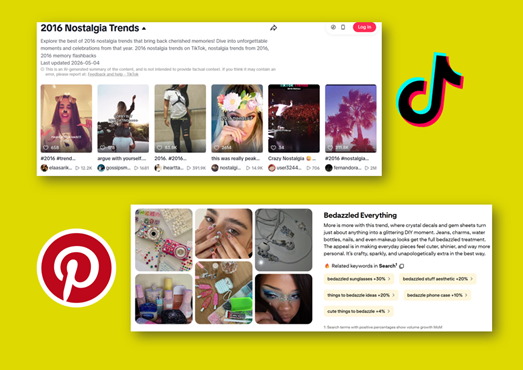
The 2016 nostalgia TikTok search is up 450% YOY. It isn’t rewatching old memes. Fortune suggested it’s a form of protest: 2016 feels like the last moment before algorithmic intensity, economic anxiety, and cultural chaos fully set in. They’re not nostalgic for the era. They’re nostalgic for an internet that didn’t feel like it owned them.