Across retail, media and social, there are clear signs of adaptation. Brands are experimenting with brand-led campaigns, reformulation, and organic-first strategies to stay visible within the new rules. At the same time, more traditional approaches, particularly around seasonal moments like Easter, are still very much in play.
That overlap is where the tension sits. Some brands are pushing into new territory, while others are testing the limits of what’s allowed, leading to early missteps and inconsistencies in execution…
Easter 2026 provides a clear snapshot of this blurry dynamic, not as a standalone moment, but as part of a wider shift in how HFSS brands are navigating a changing landscape.
For many, it was business as usual on the surface and the seasonal aisles were still dominated, Easter activations remained a key battleground, but a slight strategy pivot could definitely be spotted if you played close enough attention.
One of the clearest shifts is away from product-first marketing toward experience-led campaigns. Cadbury’s “Worldwide Hide” is a good example of this: a virtual Easter egg hunt built around connection rather than consumption. By focusing on the act of giving and shared moments, the campaign delivers on brand values while sidestepping HFSS restrictions tied to product promotion.
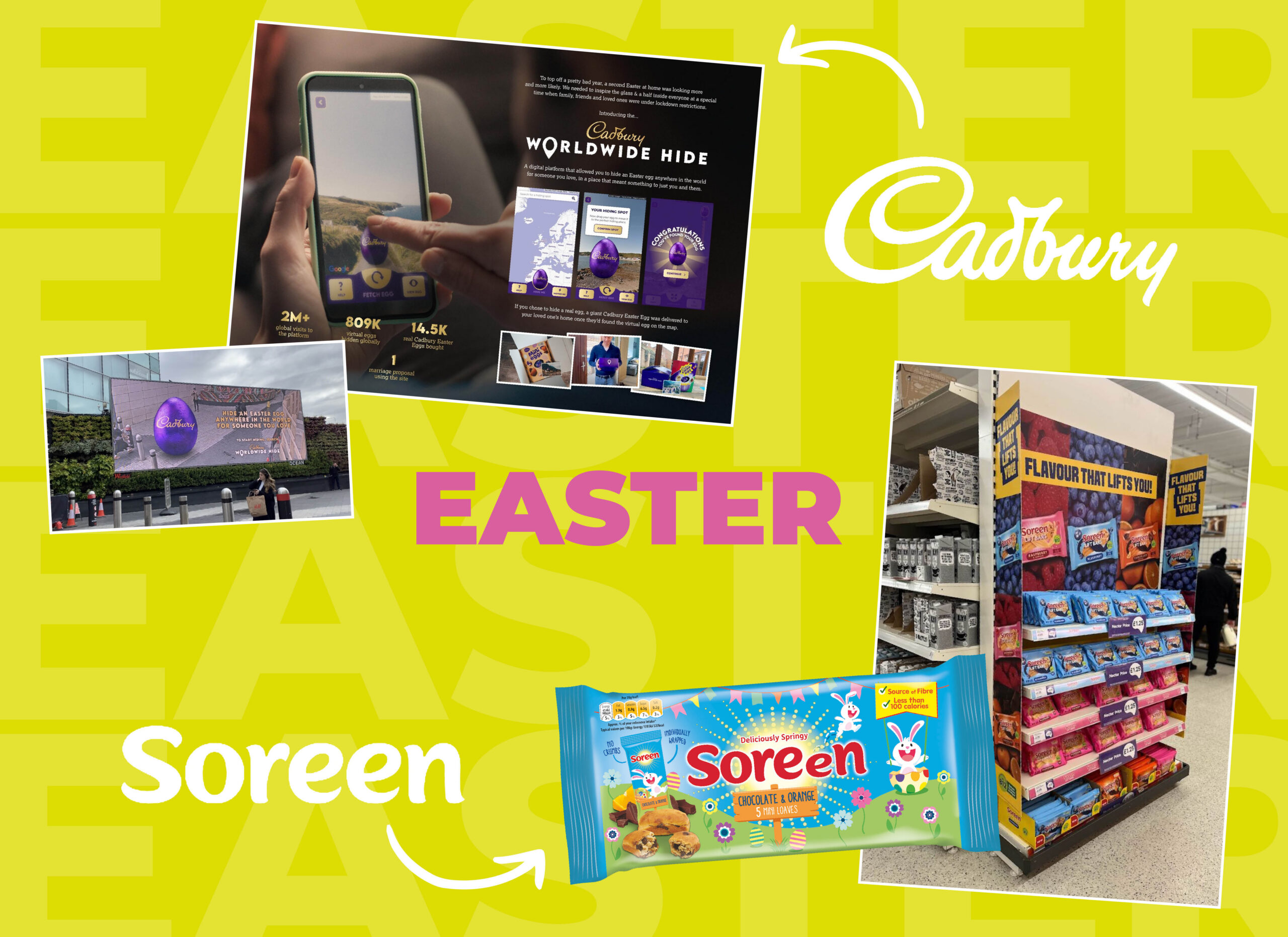
In-store, the fight for visibility hasn’t disappeared, it’s just been reframed. Brands like Cadbury, Mars and Nestlé are doubling down on permitted spaces, using large-scale displays and mid-aisle takeovers to maintain presence. At the same time, the removal of HFSS products from high-footfall areas like tills has opened the door for others. Brands such as Soreen are stepping in with compliant alternatives, effectively capturing impulse moments that were once dominated by chocolate.
Another route through the restrictions is reformulation. Mr Kipling’s expansion into non-HFSS products shows how adjusting the product itself unlocks access, not just to store placement but to media channels that are otherwise restricted. It’s a more structural response, but one that creates long-term flexibility.
Where reformulation isn’t viable, brands are leaning harder into positioning. Ferrero, for example, is focusing on Easter as a gifting occasion (ground that they sit securely in), using premium environments and adult-targeted creative to reframe the purchase context. Similarly, Lindt and Milka are pushing brand-led approaches, shifting away from product visibility and toward distinctive assets, storytelling, and emotional cues. The aim is to stay mentally available without triggering HFSS rules around identifiable products.
Alongside this, there’s a noticeable rise in strategies designed to bypass paid media altogether. M&S is a standout here, creating products with built-in “viral” appeal, their latest edition: a cornflake topped brownie that TikTokers are already creating viral ‘taste tests’ of. By designing for social sharing and influencer pickup, the brand generates reach organically, keeping visibility high without relying on paid HFSS promotion.
This behaviour is mirrored in wider food culture…
Social platforms are saturated with recipes that repackage indulgent foods as more “permissible” choices, blurring the boundary between treat and health. These creations, often framed as higher-protein or lower-fat alternatives, tap into a broader cultural shift where balance is valued over restriction. Their popularity is driven less by genuine nutritional superiority and more by social currency: people participate because the trend feels current, shareable, and aligned with evolving attitudes toward wellness rather than because it meaningfully replaces traditional treats.
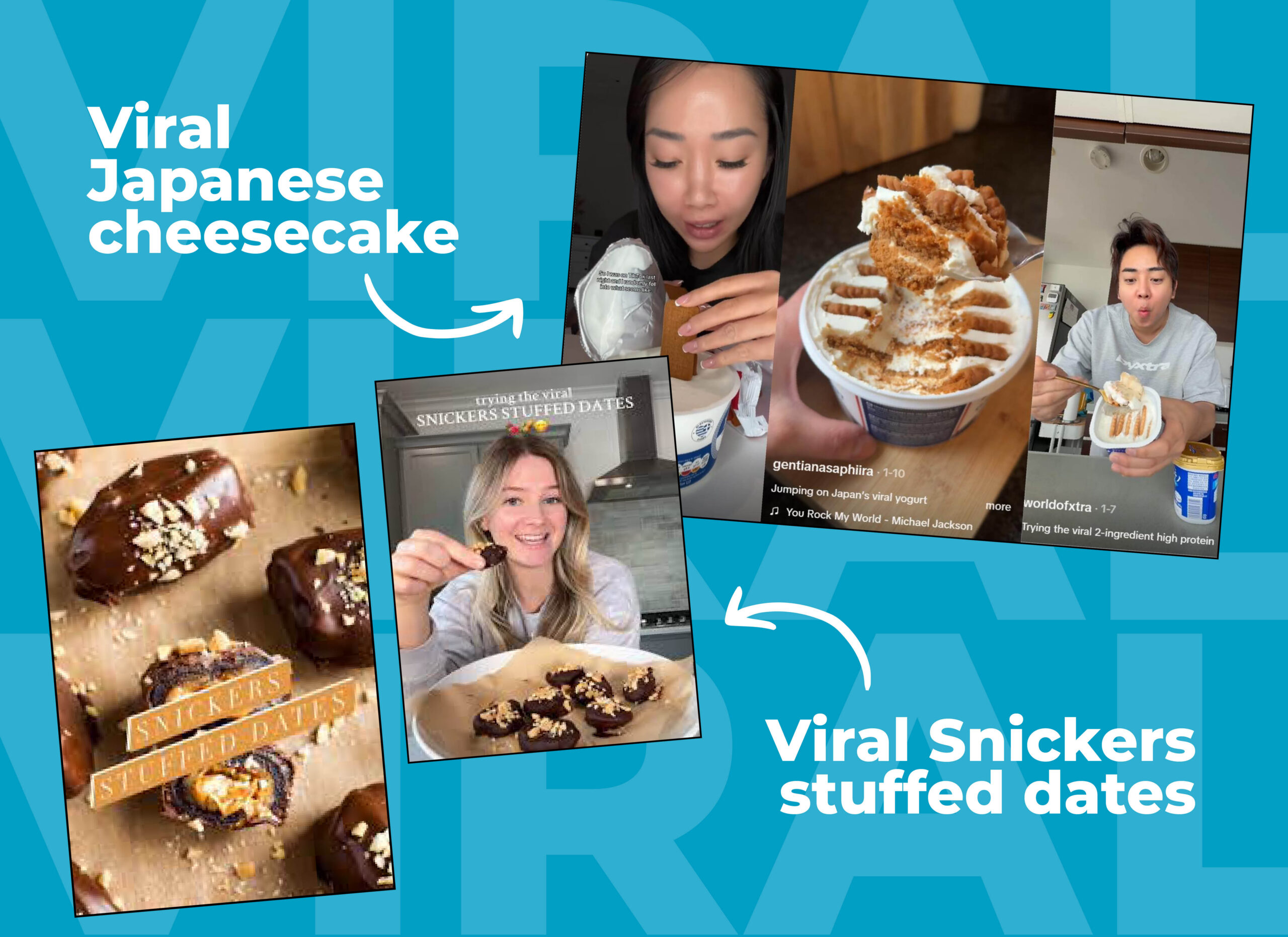
As with many viral food trends, initial excitement often outpaces long-term satisfaction, revealing a gap between expectation and reality. Yet the underlying momentum doesn’t disappear, it evolves. The sustained interest lies in the functional benefits these recipes gesture toward and their overall wellbeing payoff. This signals a deeper, more durable shift in consumer behaviour: while specific trends may fade, the demand for foods that combine convenience, perceived health benefits, and enjoyment will continue to shape how categories grow and innovate.
The ‘rise’ of wellness is now second natureThis dynamic creates a clear opening for healthy snack brands to step in, translating the appeal of these trends into products that better deliver on both taste and nutrition. By developing innovative NPDs that genuinely balance indulgence with functional benefits, brands can move beyond the short-lived hype of social media and offer consumers more reliable, satisfying ways to engage with healthier snacking. The trick is being quick to trends, without falling into the fad traps.
For example, Nākd has launched its new Protein Cherry Bars, a fruity, HFSS‑compliant alternative to the chocolate‑ and caramel‑dominated protein bar category, made with 100% natural cold‑pressed ingredients and delivering 6g of plant protein per bar. Designed to attract new shoppers seeking lighter, fruit‑forward functional snacks, the NPD featured a heavy marketing push, creating a noticeable presence in-store.
With more snacking space up for grabs, we turned to one of our favourite brands (and a firm favourite of our Senior Creative Alessia) Whitworths, to explore how it could capitalise on this shift as a non HFSS option. The aim was to reimagine how the brand could create indulgent snacking moments across multiple platforms, from experiential to OOH and digital, while staying true to its ‘better for you’ credentials. Naturally sweet, minimally processed and already aligned with health-conscious cues, dates have the potential to move beyond their traditional role as a baking ingredient and become a go to snack. When paired with contemporary flavours and formats that tap into current food trends, Whitworths can reposition its offering as both satisfying and relevant, bridging the gap between permissible indulgence and everyday snacking.
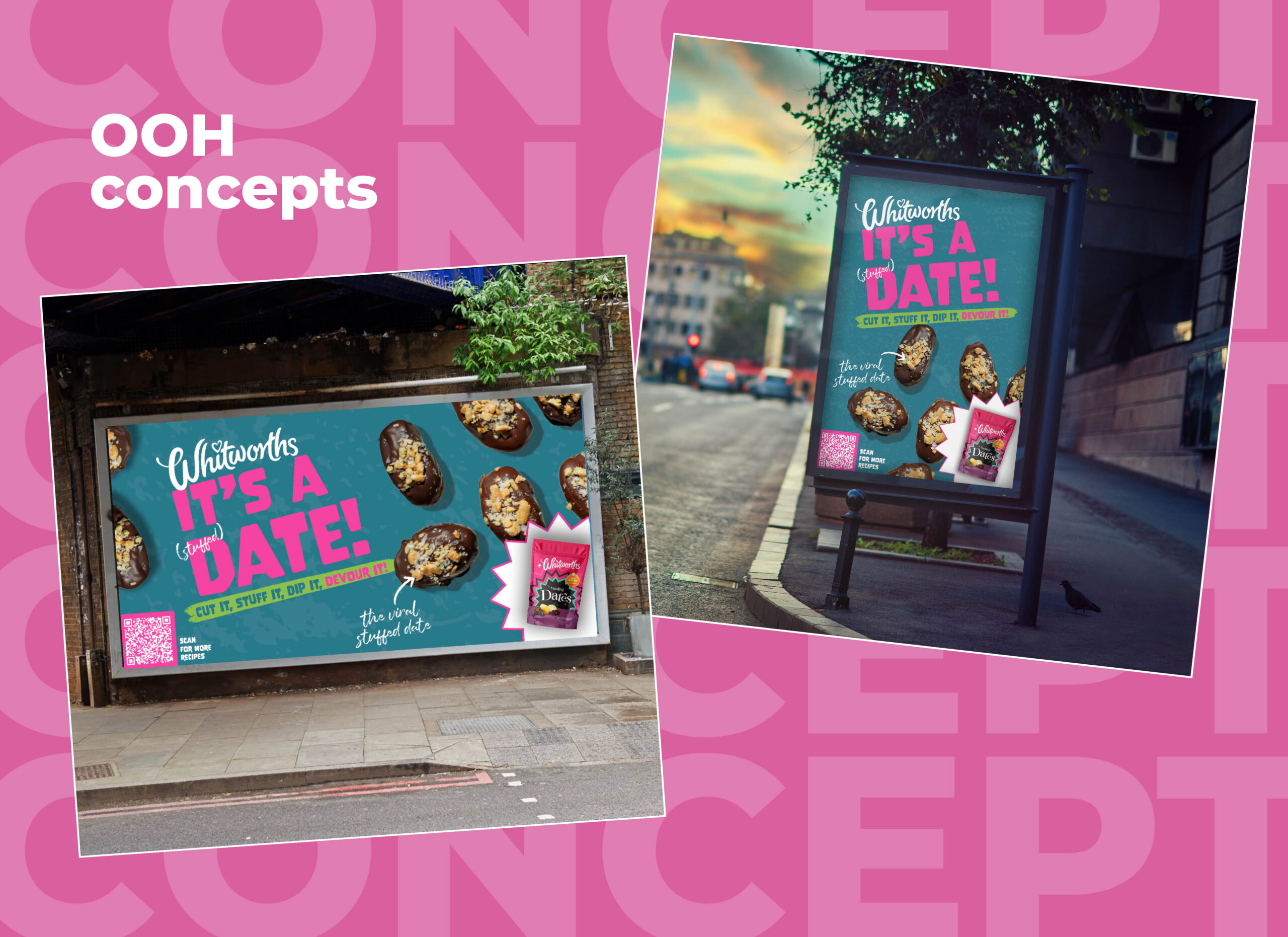
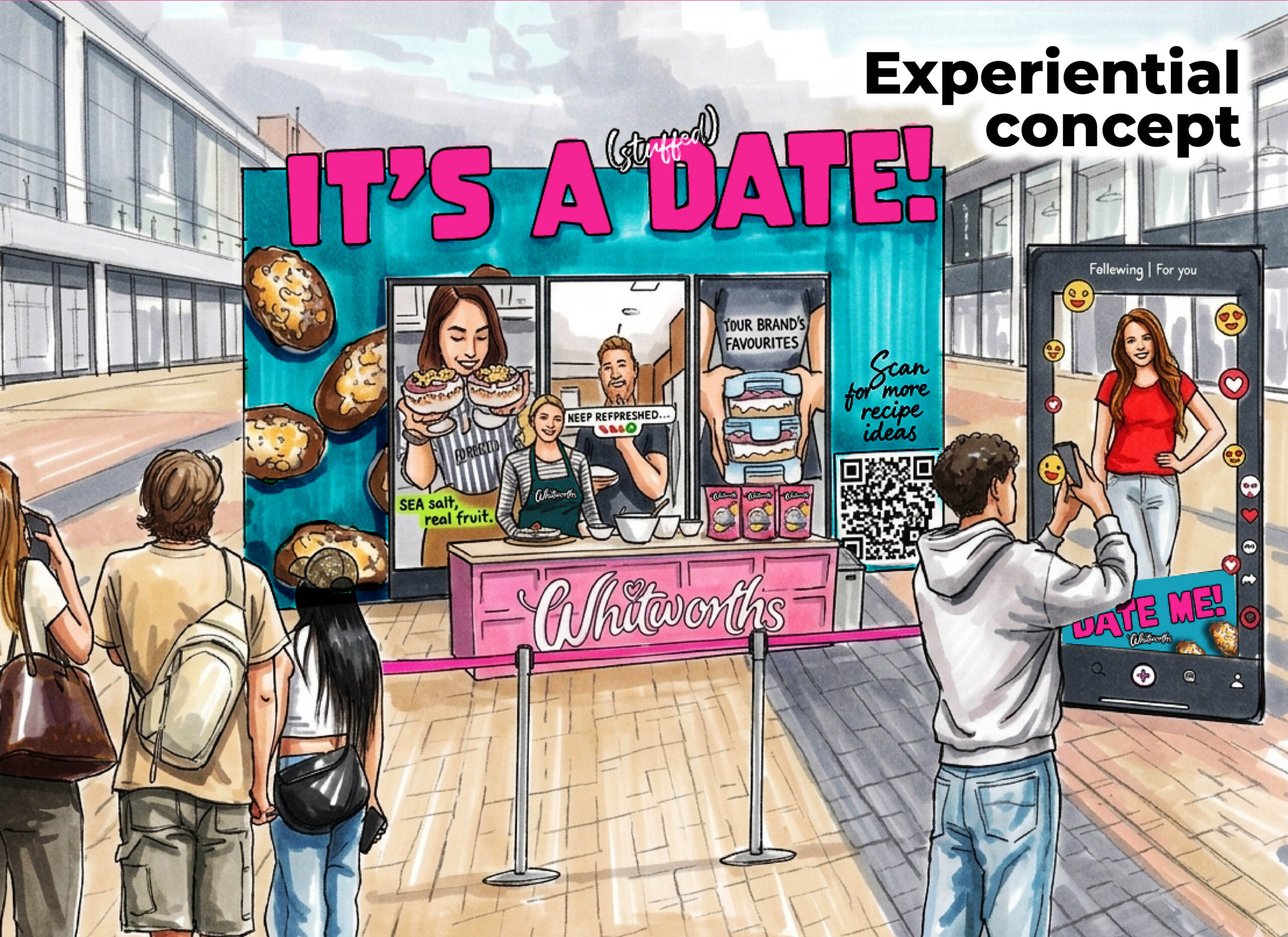
Our concept brings this repositioning to life through an experiential pop-up that reframes dates as versatile, modern, and culturally relevant. Visitors encounter viral-inspired recipes (think stuffed dates with trending fillings or globally influenced flavour pairings) designed for immediate trial and social sharing. This physical experience is amplified through bold OOH and digital placements that shift perception at scale, using striking visuals and simple messaging to challenge outdated associations and position dates as a smart, satisfying alternative in a post-HFSS landscape.
Crucially, this isn’t about inventing a new product but unlocking new occasions. By leaning into flavour, format, and visibility, Whitworths can tap into the growing demand for permissible indulgence. In doing so, the brand can capture incremental share while helping redefine what “snacking” means in a more health-conscious era.
The brands set to win in 2026 won’t be those chasing loopholes, they’ll be the ones building distinctive, future-proofed brands.
HFSS may change the rules of placement and promotion, but it doesn’t change what drives growth: clarity of positioning, emotional connection and long-term brand investment.
Before seeing the snack space evolve in such a way, it’s inevitable that there will be some bumps in the road for LHF brands either trying to comply or failing to meet new outlined regulations.
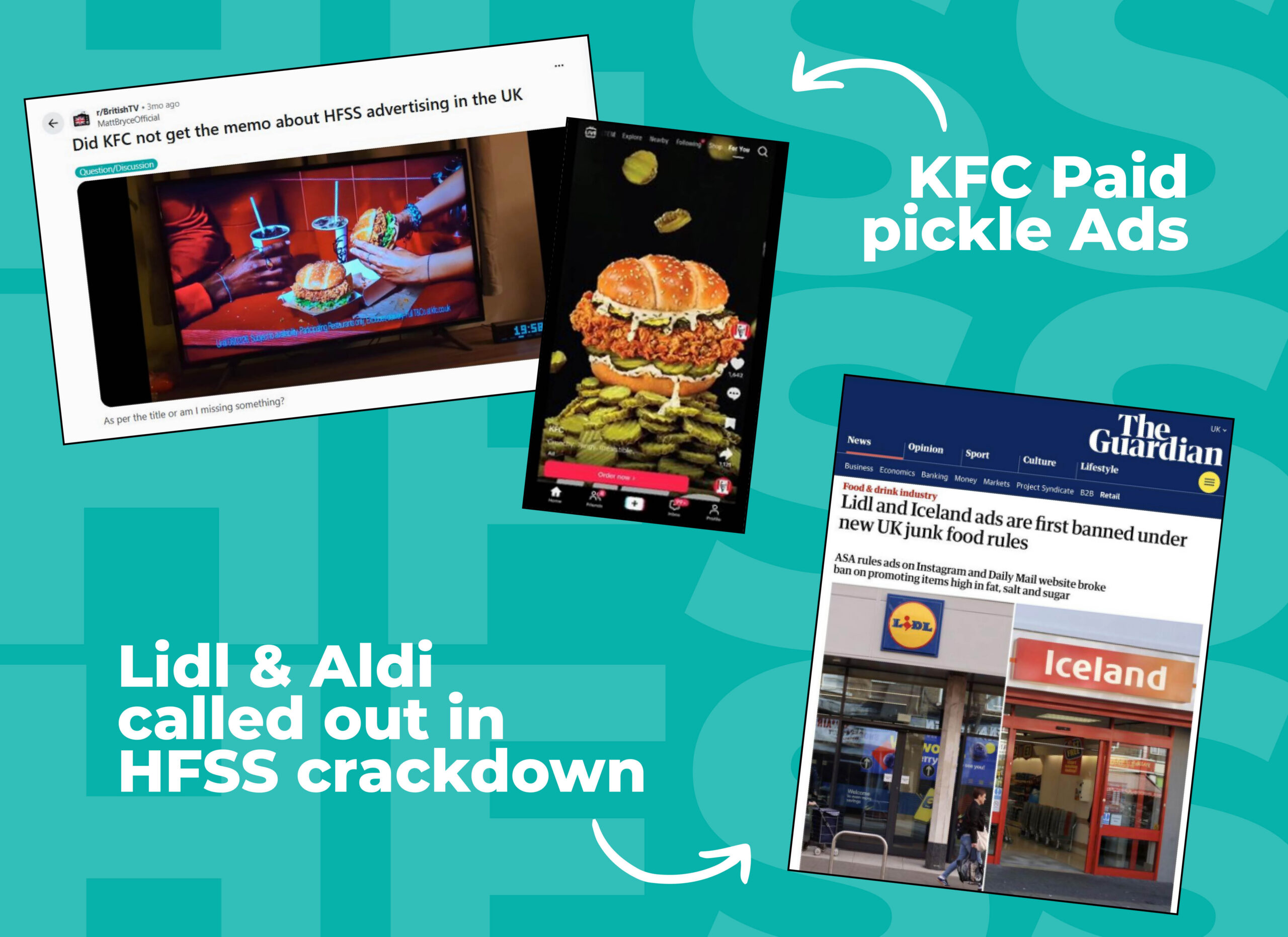
We’ve witnessed a few of these instances on socials and in the media. KFC’s pickle-led campaign, for instance, highlights the risk around paid versus organic activity, where something that works organically can quickly become non-compliant once media spend is introduced. Their paid advertisements on screens has seen consumers even speak up on socials regarding how their activity fits within the boundaries of regulations.