

Sports Media Is Splintering and here’s
What It Means for Advertisers

How do you watch sports?
Chances are, it’s not the same way you did five years ago.
Linear TV viewing has been in steady decline for a decade, especially among younger audiences. But live sport still commands huge audiences. The Euro 2020 final drew 31 million UK viewers, Euro 2024 peaked at 24.2 million, and 36.1 million tuned in for at least 15 minutes of the Paris 2024 Olympics. These big moments still matter, but they’re no longer the whole story for advertisers.
Only 29% of Gen Z watched live free-to-air sports in the past year, compared to 62% of Gen X and 71% of Boomers. Gen Z prefers streaming and social platforms, so if your media plan is still TV-heavy, you’re missing a huge chunk of younger fans.
The Gloves Are Off, The Sports Streaming
Battle Has Begun
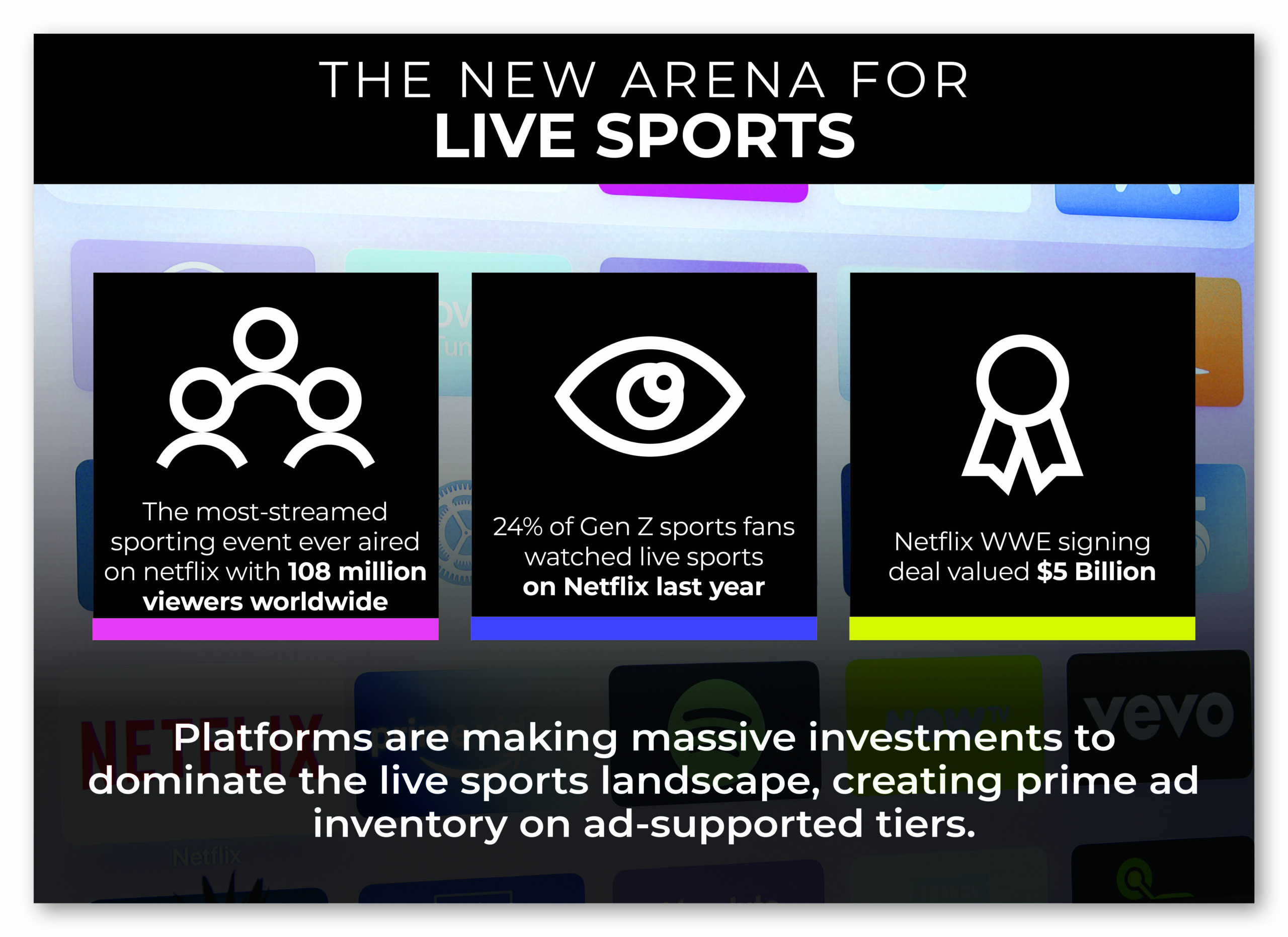
Streaming platforms are investing heavily in live sports rights, meeting fans where they already watch, and it’s paying off. Netflix’s Jake Paul vs. Mike Tyson fight drew 108 million viewers worldwide, making it the most-streamed sporting event ever. Soon after, Netflix signed a $5 billion deal to become the home of WWE. It’s no surprise then, that 24% of Gen Z sports fans watched live sports on Netflix last year. For advertisers looking to reach sports fans, ad-supported tiers on platforms like Netflix, Amazon Prime, and Disney+ are becoming prime real estate.
The flipside for fans is that with more platforms comes higher costs. 67% of fans say it’s too expensive to watch all the sports they want, and 72% of Gen Z and younger Millennials have searched for free streams in the past year. This is pushing fans toward free alternatives, especially social media, where highlights and fan-made content dominate. For advertisers, the message is clear: social isn’t optional, it’s essential.
Social media is now a go-to for sports fans, especially younger ones. 54% of Gen Z and 42% of younger Millennials watch sports highlights on social platforms, compared to just 19% of Boomers. But it’s not just highlights. 56% of fans watched fan-made content last year, from influencer-led watch-alongs to reaction videos. These formats let fans connect, debate, and feel part of a community, something traditional broadcasters can’t replicate. For advertisers, this means leaning into native, creator-driven content and partnerships.
Social media has also transformed visibility for sports that once struggled for coverage, especially women’s sports. 33% of Gen Z women’s sports fans say social content encouraged them to follow women’s sport. For brands, this is a chance to support growing communities and build authentic connections through sponsorships and creator collaborations.
Gaming
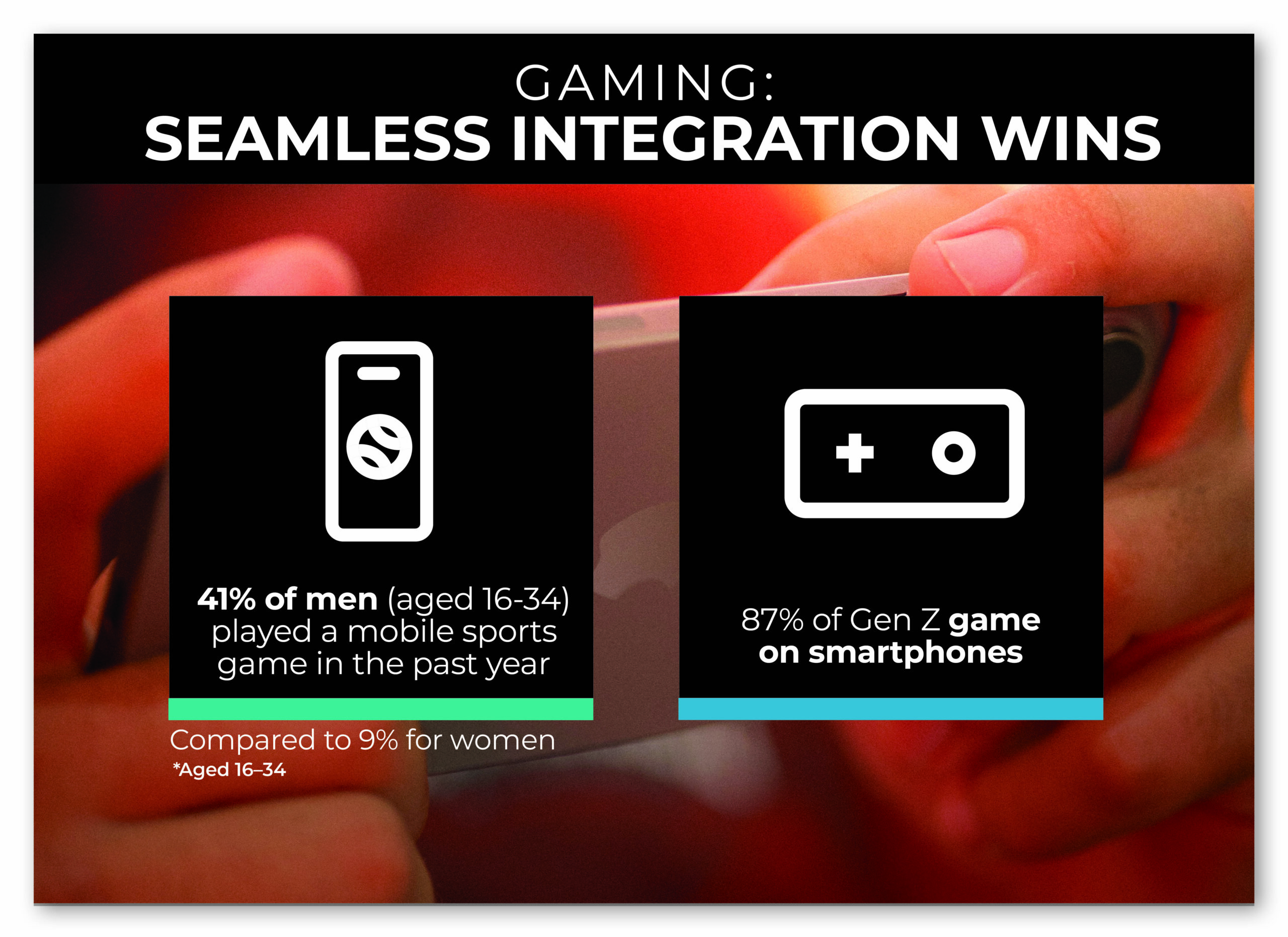
Sports gaming is hugely popular, especially among young men. 41% of men aged 16–34 played a sports game on mobile in the past year, compared to just 9% of women. Mobile dominates: 87% of Gen Z game on smartphones versus 69% on consoles.
For advertisers, this opens up a valuable touchpoint: blended in-game advertising. Sports gamers are more receptive to branded experiences than players of other genres, but context is everything. Gamers prefer ads that feel natural, like virtual billboards, sponsored breaks, or branded stadiums, rather than disruptive banners.
Done right, in-game ads do more than reach sports fans; they enhance the experience. For brands willing to tailor formats and integrate seamlessly, this is a powerful way to connect with fans where they play.
Sports media is no longer a one-size-fits-all game. From streaming giants and social platforms to gaming environments, fans, especially younger ones, are consuming sports in more fragmented, personalised ways than ever before. For advertisers, the opportunity is huge, but success depends on understanding where your audience is and what they expect from each platform.
Want to explore how your brand can win in this evolving sports media ecosystem? Get in touch, we’d love to help you make the right play.
Get in Touch, we’d love to help you make the right play.
Sources
Sport and the Media UK 2025, Mintel
The Gaming Consumer UK 2024, Mintel
Mobile Gaming UK 2023, Mintel