August 17th, 2026
Is the ‘Dystopian Influencer’ about to put the final nail in the coffin for consumer trust?

Evie Whitaker,
Trust in influencers has depleted in recent years, mine included, as consumers have gone from wholeheartedly believing influencer content to becoming far more attuned to wider communities through platforms like TikTok. They now consume content from micro influencers who build communities through authenticity and candid takes.
Shoppers know that committing to brand deals, regardless of genuine advocacy, is all too easy with the huge budgets attached to influencer marketing. And all that’s bred is distrust from the average consumer scrolling in search of genuine recommendations.
Brands have responded by rethinking their influencer strategies, investing in micro influencers and giving creators more freedom through confidence branding.
But at the same time, the role of the influencer has completely shifted for other brands.
Influencers are no longer just being asked to sell skincare or the latest fashion trend. Increasingly they’re selling the systems behind the products, from AI assistants and loyalty apps to smart glasses and software that promises to make everyday life easier. As someone who isn’t too hesitant to press the ‘Accept Cookies’ button or thorough in reading T&Cs before accepting them, this concept is still a step too far, even for me. The ask from big influencers is no longer “buy this”… it’s “trust this”.
And that’s where the Dystopian Influencer has risen.
Their role isn’t simply to promote a product. It’s to convince consumers to overlook the AI powering it, the data it collects and the boundaries it blurs. And what has that led to? Consumers who are becoming fatigued by AI creeping into every corner of their lives and brands covertly trying to reset moral compasses.
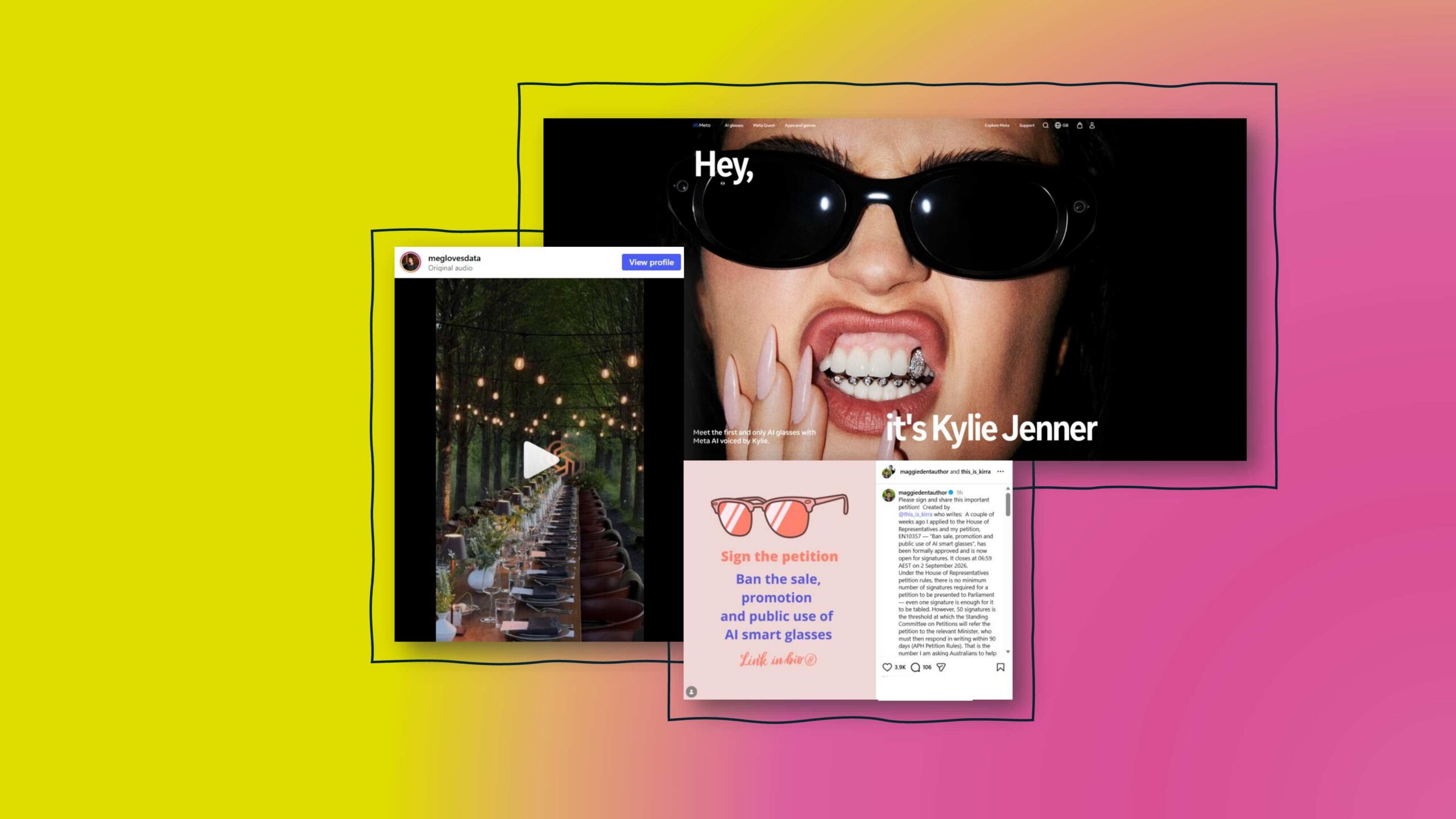
Kylie Jenner’s AI Meta glasses.
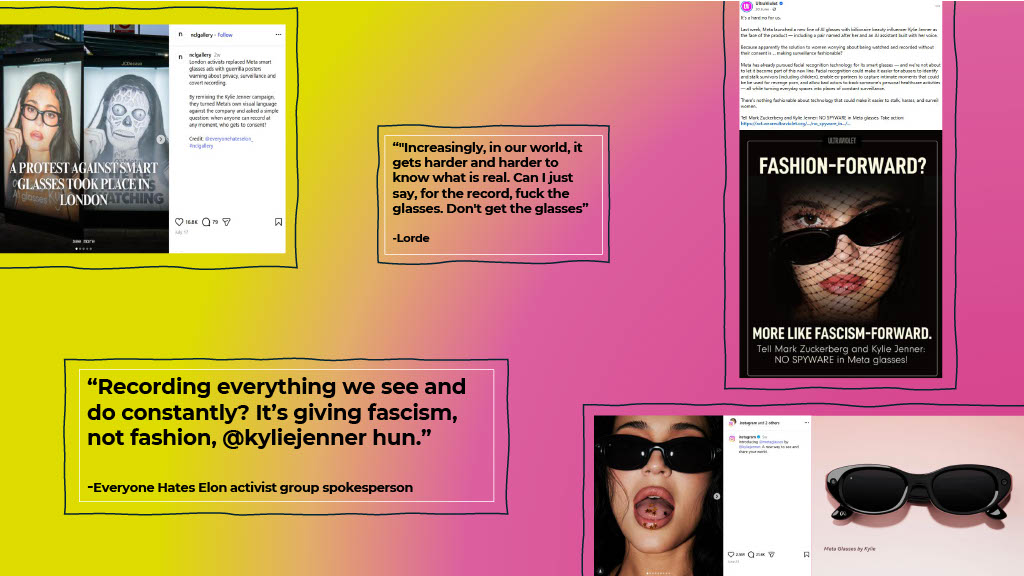
Influencer 1.0 Kylie Jenner has become the latest Dystopian brand figure, promoting Meta’s new AI glasses and proving that no matter your status, when safety and data privacy are questioned, people care.
The billionaire’s partnership introduced a designer style pair of glasses, not dissimilar to the Miu Miu aesthetic flying off luxury shelves, designed to appeal to a fashion-conscious customer first and a tech customer second. The product wasn’t just being sold on its features, it was being sold on aspiration, with Kylie acting as the bridge between consumer scepticism and AI adoption.
But the glasses, already associated with privacy concerns, especially around women’s safety, have gone down like a lead balloon. Activist group Everyone Hates Elon, alongside countless social media users, voiced concerns over what the glasses represent. Suddenly, the influencer wasn’t just endorsing a product, she was endorsing a piece of AI powered technology that asks consumers to accept constant cameras, data collection and surveillance as part of everyday life, and even a fashion accessory.
It’s a significant shift: Influencers once convinced us to buy products we could hold in our hands, now they’re being used to build trust in technologies we can’t always see or fully understand.
OpenAI’s influencer trip proves consumers aren’t buying it (or the products)
If Kylie Jenner’s Meta partnership showed influencers selling AI products, OpenAI’s first influencer trip showed something even bigger. AI companies are no longer using creators to sell technology; they’re using them to sell trust.
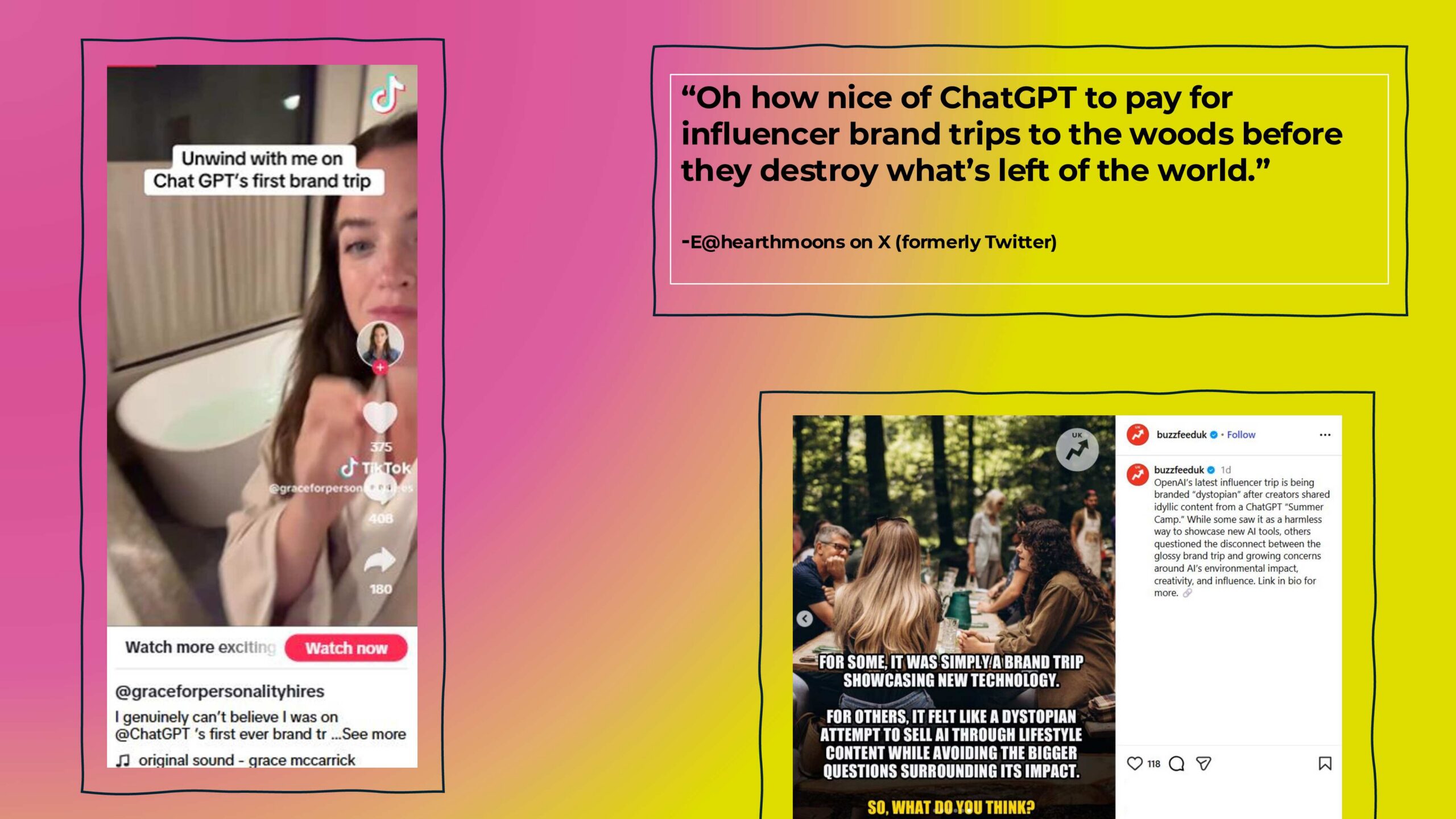
OpenAI invited creators to a luxury retreat in upstate New York to showcase its latest workplace tools. Instead of aspirational comments influencer content tends to gain, many creators found themselves facing accusations of greenwashing and helping soften the image of an industry already under scrutiny for its environmental impact, data practices and growing influence over everyday life. Some reaction videos criticising the trip even gained more traction than the content the influencers were originally invited to create.
That’s because AI isn’t just another consumer product. Consumers don’t simply want to know what the latest model can do, but rather what it means for privacy, jobs and the future; a luxury retreat can’t answer that question or soften the long-term blow your everyday consumer and worker is going to face from AI obsessed industries.